Friday, December 4, 2020

Key Moments!

                                                       MY Ah- Ha Moments!


QUOTE 1:

"We value vulnerability and transparency, lean into discomfort and taboo, work to disrupt conventional notions of love and replace them with radical ones."

    This quote was one that resonated most with me most, in chapter 8 titled, "PROFILES, KEV M·OMENTS AND A CONTINUUM OF 'YOUTH-LED PARTICIPATION" I share many of the same values that this program has and appreciate their efforts to help give the youth a voice and a place to feel safe and welcome. By being vulnerable we allow new doors to open because by being vulnerable we are allowing ourselves to be our true selves. This helps form connections with others because they may be able relate to similar situations. This can also gives others a sense of hope and a better outlook on the situation they are currently in. 

QUOTE 2:

"Recognizing the contributions of young people-in addition to the efforts of the adults who have stood behind and beside them-has been a major influence on our work in education research and practice."

    I also chose this quote from the article because I like the fact that the chapter spoke about adults standing behind and beside the youth. As a youth worker I believe it is important to support the youth having a voice in their own lives. Adults should be there to guide and help educate but not force beliefs and ideas on them but instead, helping the youth develop their own ideas and beliefs. The youth need advocates not adults directing their lives. 


Monday, November 16, 2020

New Terrain in Youth Development

 SJYD

    Social Justice Youth Development helps youth become aware of institutions and systemic forces play a role in their life. In the reading I read a quote that said, 

"This awareness that life is not predetermined is the first step toward changing these

conditions, and taking control over our fate. However, people can only truly

“know” that they can exercise control over their existence by directly engaging the

conditions that shape their lives."(p. 87).


I appreciated this quote because I believe it is extremely important to help the youth understand that they are in control of their lives and that these barriers can be overcome. Youth have a powerful voice and through forming alliances with peers who want similar changes to be made and similar messages to be heard they can make their voices that much louder. With the help of adult allies they can even further their ability to get their voices heard. 

I do not agree that if a youth is considered "at risk" that, that is the problem and the solution lies within them. I believe the youth has the ability to pave their own path, of course, but the youth is not the "problem" nor is focusing on fixing that "problem" the solution. I also do not like the term "at risk". Every youth is capable, able to learn, and has a purpose and every youth's voice matters. 

Social Justice Youth Development does not look at them as an individual but instead looks through an institutional point of view. Therefor the solution lies in fixing the problems within a school system, community, or state level. The youth have the ability to fight for new policies to then be made that can help better their education and their surroundings in hopes that it will give other youth better outlets.  

Saturday, November 14, 2020

I Know What I believe

 I KNOW WHAT I BELIEVE: Using Theory to Prepare Youth Workers


"Through a commitment to social justice, a deliberate practice of care, and a vision of learning in community, we prepare quality youth workers who are ready to lead with youth to make a better world" (p. 3)

I chose this quote because as a youth worker I believe it is important to respect the youth and give them a voice. Each and every youth deserves the right to be heard and take control of their lives with helpful caring adults that support them and their well being.

"These ideologies are not pure or fixed — a philosophy can grow, change and develop over time — and many youth development organizations reflect multiple ideologies across distinct programs or initiatives." (p. 6).

I also chose this quote because, I believe our philosophies grow as we gain more experience. I am not the same youth worker I was a year ago and I'm sure I won't be the same as I am now. The more experience gained working with the youth will better our philosophies can develop. By supporting the youth in having a voice and being heard we learn more about what kinds of support our youth need and how every youth is different.

"I thought sports were for people who could grit through the pain, and come out on top.  This wrestling program is so different.”

I chose this quote for a few different reasons.

1. I can relate to this quote on a personal experience level. Growing up I thought sports were a place where you left your problems at the door, pulled your hair back, and got to work and any problems unrelated to the sport were to be forgotten. Although, as a high school coach I want my team to bring focus and their full 100% to practice and games with them, I still pay attention what is going on in their lives. I make it a point to ask them about their lives and how they are doing mentally and physically. As both an athlete and coach I know how easy it is to over work our minds and bodies until we eventually burn out. I also know that somethings are hard to leave outside the door and as a coach it is important to remind our athletes that we are there to support them both on and off the court.

2. The second reason I chose this quote is because I think the amount of pressure on a student athlete can often be to much. They are told again and again that they are a student and they are an athlete. But never reminded that they are still human. I was an athlete for most of my life and besides the golf coach I had in high school I can not recall having a coach that asked me how I was doing outside of the sport and I went through some really hard times mentally during those seasons. I suffered from an eating disorder and depression due to my birth father walking out of my life and was dealing with an abusive relationship.

3. My flip side to this is that sports is what got me through all my hard times. Although no one knew what was going on in my personal life I had 3 different chosen families. Everyone was always pushing each other to be their absolute best and never let you give less than you were capable of. This taught me that I can make it through anything.

This all shaped me into the person and youth worker I am today. I made a decision to always make sure the youth around me know that their voices are valid and that they are not alone. I decided I would be the coach / youth worker that would make it clear that I support my youth both on and off the court. Wether they need someone to remind them that they always have someone to go to or they need support in school or they want help learning a new skill.

Friday, November 13, 2020

Marcus

  SEEING MARCUS


    In the classroom Marcus's teacher understands that he has a difficult time staying attentive. She gives him the space he needs. When he walks away from a lesson she does not yell at him or get frustrates him but instead gives him support when he is ready to come back. She has spaces for children where they can take breaks when they do not want to be part of the lesson like a break desk and a buddy room. 

    Marcus tends to have a hard time staying engaged and focused. His teacher gives him one on one attention when time allows for it and he is ready to receive it. This one on one time helps Marcus stay focused on the task in front of him. 

    During a counseling session with Marcus and his mom his mom expresses her feelings of Marcus not being involved enough and the difference between him at home and in school. His mom makes it clear that he is loved and supported at home and may not be getting that same support at school. Marcus's mom was willing to take any help and tips she could get to support her son even more. 

Marcus's teacher understands that he wants and enjoys being heard. To encourage him to be heard and use his voice to participate she offers students the opportunity to read a poster to the class. When Marcus raised his hand to read the poster she of course chose him and helped him read through the poster. By doing this she was seeing Marcus and what he needed at that time and helping him get what he needed in a positive way. 

    The narrator talks about making sure Marcus knows you are proud of him. Positive reinforcement  is so important for younger children. Reinforcing that they make you proud when they behave nicely and show they are trying encourages them to keep doing well. If a child is only ever yelled at the child will then begin looking for any form of attention including negative attention.  


 ALL ABOUT ME

My Name: KELSEY

MAJOR: Youth Development 

WHY? I truly have a passion for the youth. I love watching them succeed and being a support system for the youth. I believe every child has the ability to succeed and just needs the proper support systems to do so. 

    I currently work at a residential behavioral school for boys. These boys are  some of the brightest children I have ever met. One of the kids in my dorm can fix anything you hand him just with some tape , a screw driver and glue. Another one can name every greek god and goddess. I enjoy the time I get to spend learning from these boys wether it be their difficult moments where they need care and support or their great moments where they are all smiles. 

    I also work at a nutrition club, New Rhode Nutrition, where I am an independent herbalife distributor and I will be buying this club from my up-line in the near future! I am very excited to own my own business. 


More About Me

    I love to be active. I think that is part of why I love working with the youth so much. They have so much energy and it keeps me on my toes! I am also very passionate about nutrition. 

SPORTS: I played basketball my whole life up until college. While in college I coached a high school basketball team for two years as well as two recreational teams for 4 years. I played golf and ran cross country in high school as well. I only ever picked up a golf club for the first time my freshman year of high school and let me tell you, I was terrible!! As bad as I was though my coach never gave up on me and by my senior year I earned MVP of an all boys team, that was pretty cool. I continued to play for RIC for 4 years. I also love snowboarding and have been on a board since I was 3 years old. Learned how to wakeboard when I was 7. 


FUN FACTS

    I'm not sure if I have any really fun facts but let's see. I go to the gym at least 4x a week because it is the only thing that keeps me calm in all the chaos we are surrounded with. I like the gym because I get to push myself and really see what I am capable of. I used to be super passionate about becoming a model, I even had an interview at a huge modeling agency but I got a call for a coaching position interview at the high school on the exact same day and I chose coaching over modeling. I would love to give it another try but I think I have to many tattoos. I have 8 if you were wondering. My favorite pod cast is Call Her Daddy, mostly because of how confident this women is. 

Add caption


    That's all there is to know about me! I mean I'm sure there is more but I can't think of it all. 

Friday, October 2, 2020

Identity

Race

SCHOOL:

Growing up I can't specifically remember a time where we talked about race and racial identity. I grew up in a predominately white town and did not have a black teacher until college. Talking about race and racial identity sometimes makes me uncomfortable, its a hard topic to openly talk about and I could not even tell you why. It is probably because we did not discuss it like we should have growing up. 


COLLEGE:

When I began my studies at RIC, I began to be surrounded by other racial identities. College was the first time I was really exposed to this. Being in youth development these topics are discussed a lot and I still find myself getting anxious and hesitant to speak about the topic of race. 

"Even though most of my students voluntarily enroll in the course as an elective,

their anxiety and subsequent resistance to learning about racism quickly emerge." 


Personally, it is great to keep learning about the topic of race because it is not something I often think about. I see myself as white but I never related that to race. White has always just been white to me, just something I checked off on a form when asked. 

I am definitely more confident than I used to be when it comes to speaking on the topic but I still get nervous to define it sometimes and heres why... 


WHY I"M UNSURE

    I get nervous on language. I'm not always sure what the correct term is that I should use and I do not want to say something that will offend someone. My goal is not to offend anyone but I get nervous someone will think I am and not understand that I am still learning how to speak on the topic. 

"I really wish the White students would talk more. When I read these articles, it

makes me so mad and I really want to know what the White kids think. Don't they

care?"

    Sometimes it is easier to observe these topics and listen and absorb the information because I am not always sure how to say what I am thinking and again I get nervous to offend someone without meaning to. 

Monday, September 21, 2020

Stereotypes

Definition: Stereotypes are an oversimplified image or idea we have of other people, or groups of people. 


                                                        WHY IS THIS WRONG? 
  Well when stereotyping we are making an assumption about how a certain person or group of people will act or behave or look based on their gender, race, or color. We often even stereotype others based on the way they present themselves, their hair, clothes, shoes. In reality none of those are accurate representations of who a person truly is. 


                                                         SOME STEREOTYPES: 
   Teenagers are especially stereotyped. They are stereotyped as untrustworthy, incapable, and problem causers. Now these stereotypes extend based on gender, race, and color. A black female might be stereotyped as loud.A doctor might assume they are sexually active at a younger age than a white female. An adult might assume a black male student is a troublemaker. A boy dressed in worn down clothes is poor and will do poorer in school than the boy dressed in newer clothing.


CHECK OUT 

This article states how teens who view themselves as responsible are more likely to flourish than teens who do not see themselves as responsible. We as youth worker should be helping teens see themselves in a more positive way rather than treating them as if they are irresponsible. 

Wednesday, September 9, 2020

YDEV Cohort 8__Blog 1

WHAT DID I ALREADY KNOW: As a youth care worker, I learned quickly that focusing on a child's negative behavior does not fix that nergative behavior but instead looking deeper into their behaviors and see where they are lacking developmentally is a better approach. As a youth care worker it is important to provide the youth with opportunities for success. This can be done by providing them with the proper tools they need to be successful. A child who experiences a caring environment, had strong relationships, has expectations in place is more likely to succeed than a child who doesn't have someone setting clear expectations for them and providing a caring relationship. WHAT DID I LEARN ABOUT THE HISTORY & PRACTICE: I was unaware of the deficit- based programs that used to be in place. I also learned why they failed and what different approaches were used. These defecit programs focused souly on a youths specific behaviors. Rather tahn focusing on a child's need for strong healthy relationships with adults it foucsed on teaching them why not to have sex, or saying no to drugs. It focused on "at risk" youth rather than providing equal support and opportunities for them. WHAT DO I WANT TO kNOW MORE ABOUT: I would like to know more about how the funding was put in place when the approaches shifted. What type of funding was provided? Also, look deeper into this approach because so many children are still underprivledged and struggle to find support systems.

Thursday, November 21, 2019

Blog #9- Diversity Event

Nothing About Us Without Us: Youth and Community Perspectives on Education and Providence School Takeover

Where: Gaige Hall 200
When: Tuesday November 19, 2019 from 4-6pm

    The diversity event I attended was about the providence school takeover and it was run by the youth who are currently facing the situation. These youth were part of groups such as, PSU, ARISE, and youth in action. These are all youth lead groups that help other youth learn leadership skills and run activities and more. 

Providence Student Union:
   Mission: Building student power so that young people can improve their education. 
   Campaigns: Some campaigns that this group has run were the 
  1. Student Bill of Rights
  2. Counselors Not Cops
  3. Walk in our Shoes
  4. Gun Control Walkout
Website:  www.psu-rights.com
Social Media accounts: 
  • Twitter, Snapchat & facebook: @pvdstudentunion
The youth in PSU are concerned about the takeover because they do not have a front seat roll in the changes that will be made. They are the ones going through it and they have no say and this upsets them. It is their education that is being affected and they also cannot voice their concerns. They worry about things such as the leaky ceilings, gender neutral bathrooms, brown water, and cops. They want teachers that care about them and their learning styles not teachers that neglect or brush over them. The things these students are concerned about are going to once again go left unheard because no one is taking the time to listen to what they need to improve their education. 


Alliance of Southeast Asians: ARISE
Mission: To prepare, promote and empower Rhode Island's Southeast Asian students for educational and career success. 
Vision: Southeast Asian community that is healthy, thriving and able to reach it's full potential by being engaged and developing socially responsible members in their communities. 
Campaigns: 
  1. Youth leadership March of Our Lives
  2. P.A.S.S- PVD Alliance for Students Safety 

Youth in Action
  Youth in Action is a youth lead group that offers different kinds of workshops for other youth. Everything is youth lead. They run by different levels from when they first get started in the group. 
  1. Core
  2. Immersion- Small groups that do different things
  3. The Collective

Concerns:
   Some of the main concerns of these youth lead groups about the takeover should definitely be looked into much deeper. They are concerned because the takeover is not inclusive. It does not take into account the concerns of the students whose education is actually being affected. They are concerned about schools and their inclusiveness. The teachers barely know their names, they do not take the extra time if a student needs help because they do not want to fall behind on their lesson plans. Students do not feel as if they are people but instead ID numbers. Schools themselves are not talking about the takeover. The students feel as though everything is about money now and not about the education. The students simply want a better learning environment. 

Sunday, November 17, 2019

Hinchliffe- Blog #7 TAL, Herbert, and Brown vs Board

Hyperlinks


While reading Bob Herbert's article, Separate and Unequal, I learned that schools are still segregated in a way. Schools themselves are not segregated but due to housing patterns and areas of low income, segregation is still going on. After listening to This American Life, I began to understand more of what it is like for children going to a school in poverty areas. The podcast was about Normandy High School and the children that attended this school were not given equal opportunities. When children were not meeting expectations the teachers were not informing the parents, and for the children that were, they were not recognized. It is hard to succeed in a place where success is not seen. 


Check out this Article:
https://www.childfund.org/Content/NewsDetail/2147489206/

This is a link to a website that talks about the statistics of children living in poverty struck areas. Children born and raised in areas of poverty are less likely to make their way out of poverty, or find a job that pays more than minimum wage.


Check out this site:

This website talks about trends in the education of different ethnic and racial groups. " In 2016, the percentage of children under the age of 18 in families living in poverty was higher for Black children than Hispanic children (31 and 26 percent, respectively), and the percentages for both of these groups were higher than for White and Asian children (10 percent each)"
--> This is a quote from the website. Most children that face living in poverty are black and hispanic. Therefor education amongst blacks and hispanics is lacking the most. 

Check out this article:

Normandy High School is described as a dangerous school, where children fear for their safety every time they walk in. Their test scores are low while violence is sky rocketed. Is this due to the number of children living in poverty? Is this due to the education system at Normandy? How can the violence be stopped? 

Talking Points:
  1. If mixing low-income children into schools with higher- income children/ families shows success, why is it not being done?
  2. Why can a school go unaccredited for 15 years and still be running? That is not fair for the children that want to do good and are just not given the opportunity. 


Wednesday, October 30, 2019

Hinchliffe- Blog #6 Service Learning

"In the Service of What? The Politics of Service Learning." 
By: Joseph Kahne and Joel Westhiemer


Argument:

     The author argues that service learning projects are most often primarily based on charity but lack the opportunity for students to make caring relationships. In most cases the service learning project gives but does not promote ideas of how to change things for improvement. Educators require the act of giving but often forget to have their students observe the environment in which they are giving back to. If the students do not observe the environment or make caring relationships are they not just learning that there is a status quo?

A service learning project should be a combination of both charity and critical analysis. This pushes students to think critically how things may need to change to improve the situation of the group or area they providing service to. It also pushes students to step out of their comfort zones and engage in new experiences.


Link:
--> https://www.estrellamountain.edu/students/service-learning/service-learning-ideas
This website gives different ideas for service learning projects and could be useful for those looking at different service learning projects.


Talking Points:
  1. Would a service learning project be worth it without the critical analysis portion?
  2. I wonder if there has ever been a service learning project that developed real change in the world.  


Monday, October 21, 2019

Hinchliffe- Blog #5- August


What is a safe space?
Definition: a place or environment in which a person or category of people can feel confident that they will not be exposed to discrimination, criticism, harassment, or any other emotional or physical harm.

     In this blog I will be talking about some quotes I took from the reading "Safe Spaces" by August. 

Quote 1: 
     "Classrooms lay the foundations for an inclusive and safe society: a just community where common interest and individual differences coexist. To the extent that teachers, school administrators, and college professors create an atmosphere in which difference is not only tolerated but expected, explored, and embraced, students will be more likely to develop perspectives that result in respectful behaviors" (August pg 83). 

Response: I chose this quote because I think it sets up a clear view of what this reading brings up. Most of our growing up lives in spent in a school and in a classroom. Not only that but for most of us we spend kindergarten through 12th grade with the same people. Schools are supposed to feel safe for everyone. But often times our image in school is set at a young age and you're depicted that way until you graduate. It is not to often you see someone go from unpopular to popular. Teachers must create an environment where everyone feels that they can be comfortable with who they are. Its important to make a space where students can chose to be themselves an environment that is inclusive and safe.

Quote 2:
     "As youth proceed through the system of American schooling, they might see negative representation of the LGBT community in the health or biology classroom, where they learn about HIV/AIDS as a gay-related disease" (August pg85). 

Response: This quote was under the part about curriculum. Not many of us think about how the LGBT community is almost completely left out of the curriculum. Maybe if we were taught more about the LGBT community in elementary school and so on there would not be so many bad perspectives on their community. If people started learning about how people can be different in these ways at a younger age and we were made more aware of it maybe there would be less judgement. Maybe we would learn at a younger age that being different is okay and its normal. Then, that could eventually lead to LGBT individuals to feel more comfortable being themselves and not hiding their true selves. Everything we do in life is learned we learn from school and we learn from our parents, friends, environment. So why are schools not teaching acceptance and inclusion. 

Quote 3:
     "Language is a tool. As such, we believe that speech is performative-- it does things. Words invite or exclude, recognize or erase, empower or intimidate, examine or assume" (August pg95). 

Response: How we talk about things and view words is so important. A child should be able to use the word "gay" if he or she is using it in the right way. As a teacher or educator you could use this to teach children, explain what gay is, explain that it is a normal word and it is not bad. Then, explain what makes it bad. How not to use the word. But, do not simply punish a child for using the word without understanding the context and how the word was being used. Teach children that its normal for someone to be gay, lesbian, or transgender, teach children that these words do not describe something bad that these words do not need to be hushed or shut down. 

Talking Points:
1. Why are children punished for using words like gay instead of taught that it is okay?
2. Why is it that LGBT is not taught within the curriculum? 
3. How would parents feel if their children were learning about the LGBTQ community in school and more about what it means to be gay, lesbian, transgender. 

    This was a Ted Talk done by a transgender parent and I think its really great to listen to!


Tuesday, October 8, 2019

Hinchliffe - Blog #4: Christensen

"Unlearning the Myths that Blind Us" 
By: Christensen 
Children's Books: Good or Bad? (Talking point 1)

     Have we ever stopped to think what we are actually reading when we read these fairytale stories to children? Has anyone ever stopped and asked if it was creating a false reality for children? Cinderella needs the fancy dress and glass slippers to get the prince, Ariel needs legs to get the prince and so on. These fairytale stories favor one set of people over the other in most cases. The females are, in most cases, young, pretty, thin, and trying to achieve the goal of getting the prince. The princes are tall, handsome, and strong. What idea does this put into a young girls mind? She must be pretty and she must maintain her figure and stay thin. If theres one thing that makes me question my reality it would be just that. I feel the need to constantly work out, exercise, eat healthy. I get insecure when I gain a single pound, never mind three. Where did I get this idea that I must look a certain way? I never believed my mom when she would tell me I'm skinny enough, I don't need to lose any more weight. In fact, when she brought it up I would get kind of annoyed and tell her she only said it because she's my mom and she has to. Did I get this idea of how I need to look from watching cartoons and princess movies growing up? 

Let's consider: Humpty Dumpty
     Humpty Dumpty sat on a wall,
Humpty Dumpty had a great fall,
All the King's horses
And all the King's men
Cannot put Humpy together again
Well, Humpty Dumpty was a cannon and not an egg to start off. The cannon was shot off, "fell off a wall" and could not be fixed. The true meaning of Humpty Dumpty is not a cute story about an egg and if anything is actually sad. So why do we read these fairy tales to children?

Christensen writes, "After studying cartoons and cluldren's llrerature, my student Omar wrote: "When we read children's books, we aren't just reading cute little stories, we are discovering ihe tools with which a young society is manipulated."" Children grow up with an idea of what society is supposed to be like due to these fairytales and then are disappointed when they learn that life is not a fairytale.

Cartoons & Media: Are you influenced? 
    Are you aware of the way cartoons, media, tv shows, etc. have influenced you? Do you recognize the way you act due to the things you grew up watching or seeing? Do you follow the latest trends or wear the most popular brands? Have you ever asked yourself why you wear certain clothes or certain shoes? 
    Many of us are unaware of the role media has played in outlives. I'll be the first to admit that I always buy name brand clothes and shoes. I won't say that it is not my style because I do like my style and what I wear but I do not think I would have decided to dress this way or wear the shoes I wear without the affects of media. I follow the latest trends and brands and that may be because I unconsciously want to "fit in" or simply because it is the style I enjoy wearing. Media affects the way we act within our everyday lives. If you're a child watching a cartoon and the "cool kids" act a certain way, a child that wants to "fit in" is going to try acting that way. Christensen writes, "Many students don't want to believe that they have been manipulated by children's media or advertising" (pg 128). 

Stereotypes: Whose better? Who has power? Whose dominant? 
    One quote read, '"A Black Cinderella! Give Me a Break." She wrote: "Have you ever seen a black person, an Asian, a Hispanic in a cartoon! Did they have a leading role or were they a servant? What do you think this is doing to your child's
mind?" She ended her piece: "Women who aren't white begin to feel left OUt and ugly because they never get to play the princess."' (Christensen pg 131).  These movies teach children what the dominant role in society is. If we are being honest with ourselves then we know and can admit that the dominant roles are, white, straight, male. In the case of women it is the white women. Who decided these societal roles of power though? I challenge you to consider yourself and the role you play in society and reevaluate why you behave the way you behave.


Sunday, September 29, 2019

Extended comments on Teaching Multilingual Children by Virginia Collier


     In this blog I will be responding to Shaelyn's post on the same reading. I really enjoyed reading your blog post on Collier's reading. I fully agree that students should feel that their primary language is part of their educations. Their education should not disregard the language they already know, it should be used to help them learn a second language. She writes that "The picture, which has emerged thus far from first language acquisition research, is that children actively engage in a gradual, subconscious, and creative proof-discovery procedure through which they acquire the rule system of the language." They are only going to learn the rules of the second language through using commonality to their first language.

Code- Switching:

Collier writes, "Linguists consider code-switching to be a creative use of language by bilinguals who know both languages well." I like what Shaelyn wrote about code-switching in her blog post, she covered this topic very well. A student who can successfully speak two language is more than likely to code switch. It shows their understanding of both languages and their intellectual development. A student should not be put down for their tendencies to code switch in any way. I think Collier writes about code- switching perfectly when she writes, "Code-switching, the most creative and dynamic process of the three, is highly structured. It is governed by the gram mars of both the first and second languages. It is not a linguistic weakness." We have to stop thinking of having a second language as a weakness, it is not a weakness it is just different than what we are used to.

In the article I found online called, "South African teachers Switch Language in Class: why policy should follow" on The Conversation, it is said that "research has proved many times that pupils learn best in their own mother tongues." This is done so that students don't lose touch with their own language and so that they can learn more easily. By doing this the students are allowed to keep a piece of their identity and use it to learn another language. 

Article: http://theconversation.com/south-african-teachers-switch-languages-in-class-why-policy-should-follow-122087


 (picture is from article above)


Sunday, September 22, 2019

Blog #2- Kozol

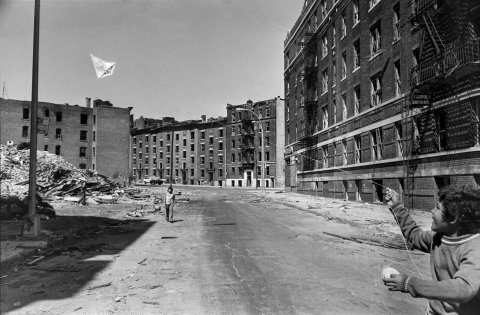
Mott Haven

   A city where life can't be lived? When you begin to read the article by Kozol, you think about how hard life must be in Mott Haven. These children have witnessed more than most of us will see in a lifetime. They have dealt with more stress and anxiety than most will ever deal with. Saddest part is that they will struggle more than most will ever struggle. Kozol writes that, "Depression is common among children in Mott Haven." No child should ever have to deal with depression. Childhood is meant for learning and having fun.  06_26_Bronx_02

Drugs and Disease
     In this area drugs such as heroin and diseases, such as, AIDS, are most common. They are so common that almost every child knows or has a relative that suffers from drug abuse or diseases. 

A sanctuary in the rough?


Image result for st ann's church mott haven bronx
  That is St. Ann's church. This area may be run down, and may be sad to look at but not when you walk into St. Ann's. The church is their diamond in the rough.


Kozol writes that, "The beautiful old stone church on 51. Ann's Avenue is a gentle sanctuary from the terrors of the streets outside."

Kozol goes on to talk about David and a conversation they had about his mother and her suffering. Imagine being the child and having to care for your mother who suffers from AIDS and going to a clinic and seeing that there is a table passing out condoms and clean needles. That just goes to show how sad the area is and how much help they truly need.

Is the statement "All lives Matter" controversial?
   I believe it is. In the article about this statement it is stated that this is just a distraction from the real issues. I agree with that statement. I think people are constantly trying to find a way to hide the real issues with a different point of view. Avoiding the issues we face is not a solution. It allows these issues to grow and continue to become bigger issues. It doesn't solve anything but instead allows these problems to stay the way they are. People tend to forget what the real problem in society is when their focus is pointed towards something else.


Image result for Black lives matter

Sunday, September 15, 2019

"Land Of Limitations?"

My Thoughts Today.. 

Land Of Limitations? By Nicholas Kristof


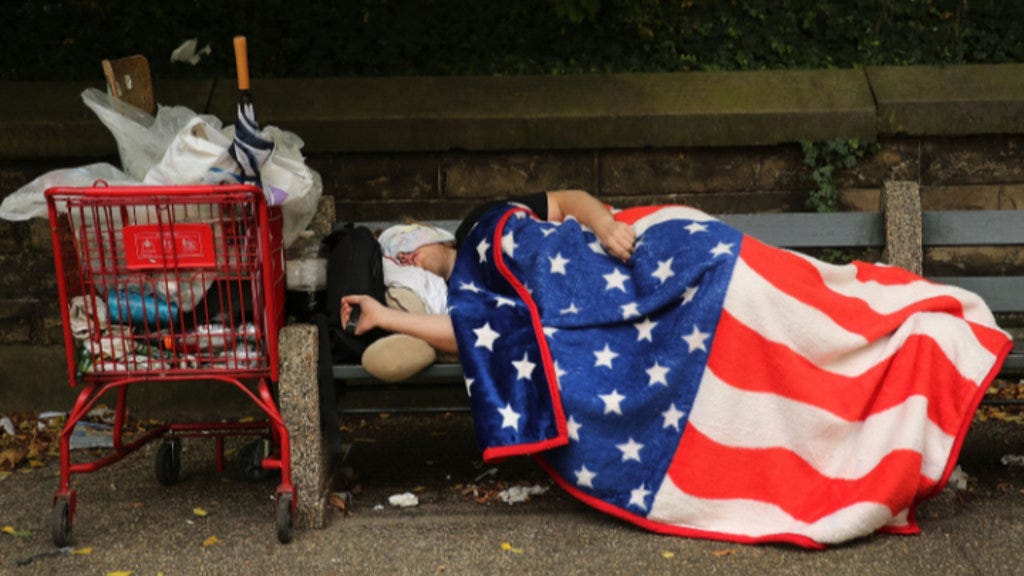
What does this image say to you?

Kristof writes about how we were once the land of opportunity. That is what this country stands for but it does not always prove to be true. Some of us are lucky enough to be born into the upper pr middle class.

Class:
Being born into the upper middle class gives you a better chance of making it in this country. Kristof writes that "A child born in the bottom quintile of incomes in the United States has only a 4 percent chance of rising to the top quintile, according to a Pew study. A separate (somewhat dated) study found that in Britain, such a boy has about a 12 percent chance." Why is the chance lower for someone in America than it is for someone in Britain? Why are these not the issues our leaders are looking at?

Opportunity:
Kristof goes on to write "“talent is universal, but opportunity is not.” This quote says a lot. Two people in this world could both be equally talented but because one has more money, or more connections that person has a higher chance of making it. As I continued to read I came across another one of Kristof's quotes that read, "the best predictor of where we end up is where we start." Kristof was talking about his friend but I was thinking of my own family and friends and how try this statement was. America is  supposed to be the land of opportunity and dreams but that is only true for a very small percentage of people. The system is set up for those in power to succeed and those without to stay at the bottom.
Camden_NJ_poverty.jpg (600×450)
Schooling:
Lets consider school and education now. Do you know that the graduation rate for those in the lower class is much lower than those from the upper middle class? Have you ever asked yourself why? In my opinion this should be a concern. Where does this issue start? How do we as a nation solve this issue?

Monday, September 9, 2019

Kelsey's Life

Hey Guys!

  Welcome to my blog! Here's some information about myself :) 

My Name: Kelsey Hinchliffe

Birthday: 09/15/1998

Home Town: Burrillville, RI

Graduated From: Burrillville High School

College: Rhode Island College

Age: 21

THIS IS ME! 


     High School
In high school I took AP classes, and played many sports. I ran cross country and beat my personal record by a total of two minutes my senior year. I played basketball and golf. I lettered in all three sports and got MVP for golf. I was awarded MVP for golf, sportsmanship for basketball, Overall sportsmanship for the school, Roger Hall Award and more. I broke my nose my senior year in basketball and wore a face mask to continue out the season. 


Jobs

Currently I work at Burrillville Extended Care which is a before and after school care program. I also work as a bartender at a golf course. Seasonally, I am the JV Girls Basketball Coach at Lincoln High School. 


Volunteer

I coach a recreational basketball team in the BYBA league for my town. I have been doing this for the past three years. I have coached a biddies team along with the junior and senior girls division. 


College Sports
    I play golf for RIC. I have been playing since I entered into RIC 3 years ago. 

Interests/ Hobbies
   I love going on adventures. My favorite trip I have ever taken was to California with  my best friend. We went right after we graduated high school.
I also like taken random day trips to go do things like hiking. Over the summer I took a trip to NH and visited Glen Ellis Falls and one other waterfall. 


Aside from loving adventures I am huge into health, nutrition and fitness. I go to Body Rock in Cumberland multiple times a week and love herbalife shakes. I have one everyday for either breakfast or lunch. My favorite place is New Rhode Nutrition in Burrillville.