Thursday, November 21, 2019

Blog #9- Diversity Event

Nothing About Us Without Us: Youth and Community Perspectives on Education and Providence School Takeover

Where: Gaige Hall 200
When: Tuesday November 19, 2019 from 4-6pm

    The diversity event I attended was about the providence school takeover and it was run by the youth who are currently facing the situation. These youth were part of groups such as, PSU, ARISE, and youth in action. These are all youth lead groups that help other youth learn leadership skills and run activities and more. 

Providence Student Union:
   Mission: Building student power so that young people can improve their education. 
   Campaigns: Some campaigns that this group has run were the 
  1. Student Bill of Rights
  2. Counselors Not Cops
  3. Walk in our Shoes
  4. Gun Control Walkout
Website:  www.psu-rights.com
Social Media accounts: 
  • Twitter, Snapchat & facebook: @pvdstudentunion
The youth in PSU are concerned about the takeover because they do not have a front seat roll in the changes that will be made. They are the ones going through it and they have no say and this upsets them. It is their education that is being affected and they also cannot voice their concerns. They worry about things such as the leaky ceilings, gender neutral bathrooms, brown water, and cops. They want teachers that care about them and their learning styles not teachers that neglect or brush over them. The things these students are concerned about are going to once again go left unheard because no one is taking the time to listen to what they need to improve their education. 


Alliance of Southeast Asians: ARISE
Mission: To prepare, promote and empower Rhode Island's Southeast Asian students for educational and career success. 
Vision: Southeast Asian community that is healthy, thriving and able to reach it's full potential by being engaged and developing socially responsible members in their communities. 
Campaigns: 
  1. Youth leadership March of Our Lives
  2. P.A.S.S- PVD Alliance for Students Safety 

Youth in Action
  Youth in Action is a youth lead group that offers different kinds of workshops for other youth. Everything is youth lead. They run by different levels from when they first get started in the group. 
  1. Core
  2. Immersion- Small groups that do different things
  3. The Collective

Concerns:
   Some of the main concerns of these youth lead groups about the takeover should definitely be looked into much deeper. They are concerned because the takeover is not inclusive. It does not take into account the concerns of the students whose education is actually being affected. They are concerned about schools and their inclusiveness. The teachers barely know their names, they do not take the extra time if a student needs help because they do not want to fall behind on their lesson plans. Students do not feel as if they are people but instead ID numbers. Schools themselves are not talking about the takeover. The students feel as though everything is about money now and not about the education. The students simply want a better learning environment. 

Sunday, November 17, 2019

Hinchliffe- Blog #7 TAL, Herbert, and Brown vs Board

Hyperlinks


While reading Bob Herbert's article, Separate and Unequal, I learned that schools are still segregated in a way. Schools themselves are not segregated but due to housing patterns and areas of low income, segregation is still going on. After listening to This American Life, I began to understand more of what it is like for children going to a school in poverty areas. The podcast was about Normandy High School and the children that attended this school were not given equal opportunities. When children were not meeting expectations the teachers were not informing the parents, and for the children that were, they were not recognized. It is hard to succeed in a place where success is not seen. 


Check out this Article:
https://www.childfund.org/Content/NewsDetail/2147489206/

This is a link to a website that talks about the statistics of children living in poverty struck areas. Children born and raised in areas of poverty are less likely to make their way out of poverty, or find a job that pays more than minimum wage.


Check out this site:

This website talks about trends in the education of different ethnic and racial groups. " In 2016, the percentage of children under the age of 18 in families living in poverty was higher for Black children than Hispanic children (31 and 26 percent, respectively), and the percentages for both of these groups were higher than for White and Asian children (10 percent each)"
--> This is a quote from the website. Most children that face living in poverty are black and hispanic. Therefor education amongst blacks and hispanics is lacking the most. 

Check out this article:

Normandy High School is described as a dangerous school, where children fear for their safety every time they walk in. Their test scores are low while violence is sky rocketed. Is this due to the number of children living in poverty? Is this due to the education system at Normandy? How can the violence be stopped? 

Talking Points:
  1. If mixing low-income children into schools with higher- income children/ families shows success, why is it not being done?
  2. Why can a school go unaccredited for 15 years and still be running? That is not fair for the children that want to do good and are just not given the opportunity. 


Wednesday, October 30, 2019

Hinchliffe- Blog #6 Service Learning

"In the Service of What? The Politics of Service Learning." 
By: Joseph Kahne and Joel Westhiemer


Argument:

     The author argues that service learning projects are most often primarily based on charity but lack the opportunity for students to make caring relationships. In most cases the service learning project gives but does not promote ideas of how to change things for improvement. Educators require the act of giving but often forget to have their students observe the environment in which they are giving back to. If the students do not observe the environment or make caring relationships are they not just learning that there is a status quo?

A service learning project should be a combination of both charity and critical analysis. This pushes students to think critically how things may need to change to improve the situation of the group or area they providing service to. It also pushes students to step out of their comfort zones and engage in new experiences.


Link:
--> https://www.estrellamountain.edu/students/service-learning/service-learning-ideas
This website gives different ideas for service learning projects and could be useful for those looking at different service learning projects.


Talking Points:
  1. Would a service learning project be worth it without the critical analysis portion?
  2. I wonder if there has ever been a service learning project that developed real change in the world.  


Monday, October 21, 2019

Hinchliffe- Blog #5- August


What is a safe space?
Definition: a place or environment in which a person or category of people can feel confident that they will not be exposed to discrimination, criticism, harassment, or any other emotional or physical harm.

     In this blog I will be talking about some quotes I took from the reading "Safe Spaces" by August. 

Quote 1: 
     "Classrooms lay the foundations for an inclusive and safe society: a just community where common interest and individual differences coexist. To the extent that teachers, school administrators, and college professors create an atmosphere in which difference is not only tolerated but expected, explored, and embraced, students will be more likely to develop perspectives that result in respectful behaviors" (August pg 83). 

Response: I chose this quote because I think it sets up a clear view of what this reading brings up. Most of our growing up lives in spent in a school and in a classroom. Not only that but for most of us we spend kindergarten through 12th grade with the same people. Schools are supposed to feel safe for everyone. But often times our image in school is set at a young age and you're depicted that way until you graduate. It is not to often you see someone go from unpopular to popular. Teachers must create an environment where everyone feels that they can be comfortable with who they are. Its important to make a space where students can chose to be themselves an environment that is inclusive and safe.

Quote 2:
     "As youth proceed through the system of American schooling, they might see negative representation of the LGBT community in the health or biology classroom, where they learn about HIV/AIDS as a gay-related disease" (August pg85). 

Response: This quote was under the part about curriculum. Not many of us think about how the LGBT community is almost completely left out of the curriculum. Maybe if we were taught more about the LGBT community in elementary school and so on there would not be so many bad perspectives on their community. If people started learning about how people can be different in these ways at a younger age and we were made more aware of it maybe there would be less judgement. Maybe we would learn at a younger age that being different is okay and its normal. Then, that could eventually lead to LGBT individuals to feel more comfortable being themselves and not hiding their true selves. Everything we do in life is learned we learn from school and we learn from our parents, friends, environment. So why are schools not teaching acceptance and inclusion. 

Quote 3:
     "Language is a tool. As such, we believe that speech is performative-- it does things. Words invite or exclude, recognize or erase, empower or intimidate, examine or assume" (August pg95). 

Response: How we talk about things and view words is so important. A child should be able to use the word "gay" if he or she is using it in the right way. As a teacher or educator you could use this to teach children, explain what gay is, explain that it is a normal word and it is not bad. Then, explain what makes it bad. How not to use the word. But, do not simply punish a child for using the word without understanding the context and how the word was being used. Teach children that its normal for someone to be gay, lesbian, or transgender, teach children that these words do not describe something bad that these words do not need to be hushed or shut down. 

Talking Points:
1. Why are children punished for using words like gay instead of taught that it is okay?
2. Why is it that LGBT is not taught within the curriculum? 
3. How would parents feel if their children were learning about the LGBTQ community in school and more about what it means to be gay, lesbian, transgender. 

    This was a Ted Talk done by a transgender parent and I think its really great to listen to!


Tuesday, October 8, 2019

Hinchliffe - Blog #4: Christensen

"Unlearning the Myths that Blind Us" 
By: Christensen 
Children's Books: Good or Bad? (Talking point 1)

     Have we ever stopped to think what we are actually reading when we read these fairytale stories to children? Has anyone ever stopped and asked if it was creating a false reality for children? Cinderella needs the fancy dress and glass slippers to get the prince, Ariel needs legs to get the prince and so on. These fairytale stories favor one set of people over the other in most cases. The females are, in most cases, young, pretty, thin, and trying to achieve the goal of getting the prince. The princes are tall, handsome, and strong. What idea does this put into a young girls mind? She must be pretty and she must maintain her figure and stay thin. If theres one thing that makes me question my reality it would be just that. I feel the need to constantly work out, exercise, eat healthy. I get insecure when I gain a single pound, never mind three. Where did I get this idea that I must look a certain way? I never believed my mom when she would tell me I'm skinny enough, I don't need to lose any more weight. In fact, when she brought it up I would get kind of annoyed and tell her she only said it because she's my mom and she has to. Did I get this idea of how I need to look from watching cartoons and princess movies growing up? 

Let's consider: Humpty Dumpty
     Humpty Dumpty sat on a wall,
Humpty Dumpty had a great fall,
All the King's horses
And all the King's men
Cannot put Humpy together again
Well, Humpty Dumpty was a cannon and not an egg to start off. The cannon was shot off, "fell off a wall" and could not be fixed. The true meaning of Humpty Dumpty is not a cute story about an egg and if anything is actually sad. So why do we read these fairy tales to children?

Christensen writes, "After studying cartoons and cluldren's llrerature, my student Omar wrote: "When we read children's books, we aren't just reading cute little stories, we are discovering ihe tools with which a young society is manipulated."" Children grow up with an idea of what society is supposed to be like due to these fairytales and then are disappointed when they learn that life is not a fairytale.

Cartoons & Media: Are you influenced? 
    Are you aware of the way cartoons, media, tv shows, etc. have influenced you? Do you recognize the way you act due to the things you grew up watching or seeing? Do you follow the latest trends or wear the most popular brands? Have you ever asked yourself why you wear certain clothes or certain shoes? 
    Many of us are unaware of the role media has played in outlives. I'll be the first to admit that I always buy name brand clothes and shoes. I won't say that it is not my style because I do like my style and what I wear but I do not think I would have decided to dress this way or wear the shoes I wear without the affects of media. I follow the latest trends and brands and that may be because I unconsciously want to "fit in" or simply because it is the style I enjoy wearing. Media affects the way we act within our everyday lives. If you're a child watching a cartoon and the "cool kids" act a certain way, a child that wants to "fit in" is going to try acting that way. Christensen writes, "Many students don't want to believe that they have been manipulated by children's media or advertising" (pg 128). 

Stereotypes: Whose better? Who has power? Whose dominant? 
    One quote read, '"A Black Cinderella! Give Me a Break." She wrote: "Have you ever seen a black person, an Asian, a Hispanic in a cartoon! Did they have a leading role or were they a servant? What do you think this is doing to your child's
mind?" She ended her piece: "Women who aren't white begin to feel left OUt and ugly because they never get to play the princess."' (Christensen pg 131).  These movies teach children what the dominant role in society is. If we are being honest with ourselves then we know and can admit that the dominant roles are, white, straight, male. In the case of women it is the white women. Who decided these societal roles of power though? I challenge you to consider yourself and the role you play in society and reevaluate why you behave the way you behave.


Sunday, September 29, 2019

Extended comments on Teaching Multilingual Children by Virginia Collier


     In this blog I will be responding to Shaelyn's post on the same reading. I really enjoyed reading your blog post on Collier's reading. I fully agree that students should feel that their primary language is part of their educations. Their education should not disregard the language they already know, it should be used to help them learn a second language. She writes that "The picture, which has emerged thus far from first language acquisition research, is that children actively engage in a gradual, subconscious, and creative proof-discovery procedure through which they acquire the rule system of the language." They are only going to learn the rules of the second language through using commonality to their first language.

Code- Switching:

Collier writes, "Linguists consider code-switching to be a creative use of language by bilinguals who know both languages well." I like what Shaelyn wrote about code-switching in her blog post, she covered this topic very well. A student who can successfully speak two language is more than likely to code switch. It shows their understanding of both languages and their intellectual development. A student should not be put down for their tendencies to code switch in any way. I think Collier writes about code- switching perfectly when she writes, "Code-switching, the most creative and dynamic process of the three, is highly structured. It is governed by the gram mars of both the first and second languages. It is not a linguistic weakness." We have to stop thinking of having a second language as a weakness, it is not a weakness it is just different than what we are used to.

In the article I found online called, "South African teachers Switch Language in Class: why policy should follow" on The Conversation, it is said that "research has proved many times that pupils learn best in their own mother tongues." This is done so that students don't lose touch with their own language and so that they can learn more easily. By doing this the students are allowed to keep a piece of their identity and use it to learn another language. 

Article: http://theconversation.com/south-african-teachers-switch-languages-in-class-why-policy-should-follow-122087


 (picture is from article above)


Sunday, September 22, 2019

Blog #2- Kozol

Mott Haven

   A city where life can't be lived? When you begin to read the article by Kozol, you think about how hard life must be in Mott Haven. These children have witnessed more than most of us will see in a lifetime. They have dealt with more stress and anxiety than most will ever deal with. Saddest part is that they will struggle more than most will ever struggle. Kozol writes that, "Depression is common among children in Mott Haven." No child should ever have to deal with depression. Childhood is meant for learning and having fun.  06_26_Bronx_02

Drugs and Disease
     In this area drugs such as heroin and diseases, such as, AIDS, are most common. They are so common that almost every child knows or has a relative that suffers from drug abuse or diseases. 

A sanctuary in the rough?


Image result for st ann's church mott haven bronx
  That is St. Ann's church. This area may be run down, and may be sad to look at but not when you walk into St. Ann's. The church is their diamond in the rough.


Kozol writes that, "The beautiful old stone church on 51. Ann's Avenue is a gentle sanctuary from the terrors of the streets outside."

Kozol goes on to talk about David and a conversation they had about his mother and her suffering. Imagine being the child and having to care for your mother who suffers from AIDS and going to a clinic and seeing that there is a table passing out condoms and clean needles. That just goes to show how sad the area is and how much help they truly need.

Is the statement "All lives Matter" controversial?
   I believe it is. In the article about this statement it is stated that this is just a distraction from the real issues. I agree with that statement. I think people are constantly trying to find a way to hide the real issues with a different point of view. Avoiding the issues we face is not a solution. It allows these issues to grow and continue to become bigger issues. It doesn't solve anything but instead allows these problems to stay the way they are. People tend to forget what the real problem in society is when their focus is pointed towards something else.


Image result for Black lives matter

Sunday, September 15, 2019

"Land Of Limitations?"

My Thoughts Today.. 

Land Of Limitations? By Nicholas Kristof


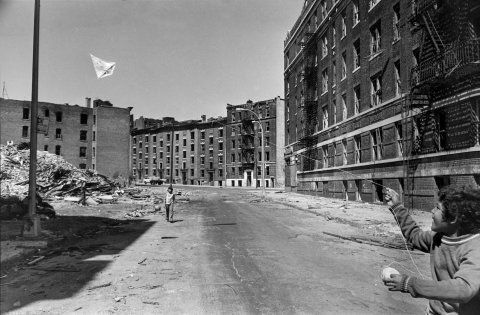
What does this image say to you?

Kristof writes about how we were once the land of opportunity. That is what this country stands for but it does not always prove to be true. Some of us are lucky enough to be born into the upper pr middle class.

Class:
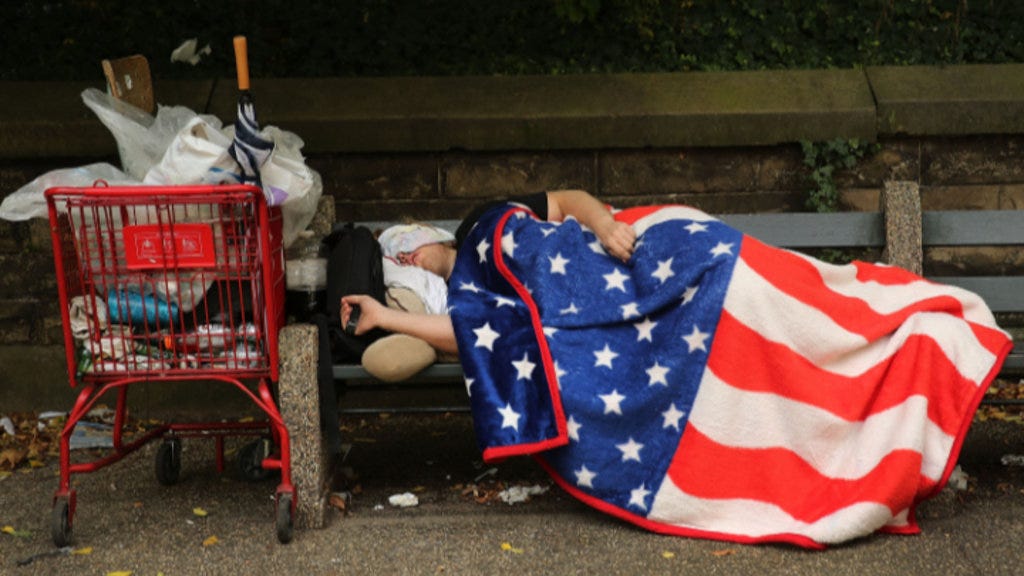
Being born into the upper middle class gives you a better chance of making it in this country. Kristof writes that "A child born in the bottom quintile of incomes in the United States has only a 4 percent chance of rising to the top quintile, according to a Pew study. A separate (somewhat dated) study found that in Britain, such a boy has about a 12 percent chance." Why is the chance lower for someone in America than it is for someone in Britain? Why are these not the issues our leaders are looking at?

Opportunity:
Kristof goes on to write "“talent is universal, but opportunity is not.” This quote says a lot. Two people in this world could both be equally talented but because one has more money, or more connections that person has a higher chance of making it. As I continued to read I came across another one of Kristof's quotes that read, "the best predictor of where we end up is where we start." Kristof was talking about his friend but I was thinking of my own family and friends and how try this statement was. America is  supposed to be the land of opportunity and dreams but that is only true for a very small percentage of people. The system is set up for those in power to succeed and those without to stay at the bottom.
Camden_NJ_poverty.jpg (600×450)
Schooling:
Lets consider school and education now. Do you know that the graduation rate for those in the lower class is much lower than those from the upper middle class? Have you ever asked yourself why? In my opinion this should be a concern. Where does this issue start? How do we as a nation solve this issue?

Monday, September 9, 2019

Kelsey's Life

Hey Guys!

  Welcome to my blog! Here's some information about myself :) 

My Name: Kelsey Hinchliffe

Birthday: 09/15/1998

Home Town: Burrillville, RI

Graduated From: Burrillville High School

College: Rhode Island College

Age: 21

THIS IS ME! 


     High School
In high school I took AP classes, and played many sports. I ran cross country and beat my personal record by a total of two minutes my senior year. I played basketball and golf. I lettered in all three sports and got MVP for golf. I was awarded MVP for golf, sportsmanship for basketball, Overall sportsmanship for the school, Roger Hall Award and more. I broke my nose my senior year in basketball and wore a face mask to continue out the season. 


Jobs

Currently I work at Burrillville Extended Care which is a before and after school care program. I also work as a bartender at a golf course. Seasonally, I am the JV Girls Basketball Coach at Lincoln High School. 


Volunteer

I coach a recreational basketball team in the BYBA league for my town. I have been doing this for the past three years. I have coached a biddies team along with the junior and senior girls division. 


College Sports
    I play golf for RIC. I have been playing since I entered into RIC 3 years ago. 

Interests/ Hobbies
   I love going on adventures. My favorite trip I have ever taken was to California with  my best friend. We went right after we graduated high school.
I also like taken random day trips to go do things like hiking. Over the summer I took a trip to NH and visited Glen Ellis Falls and one other waterfall. 


Aside from loving adventures I am huge into health, nutrition and fitness. I go to Body Rock in Cumberland multiple times a week and love herbalife shakes. I have one everyday for either breakfast or lunch. My favorite place is New Rhode Nutrition in Burrillville.